Nurses, Laboratory Technologists, Pharmacists, Therapists, Social Workers, Chiropractors, Medical Administrators, Dental Hygienists, Chaplains and countless Hospital and Nursing Home career caregivers, may be eligible for our Homes for Heroes program.
We would use the Homes for Heroes program in tandem with the Mortgage program you’re approved for (USDA, VA, FHA or Conventional) and we help with the loan approval process!
The Homes for Heroes promise:
✓ No additional forms.
✓ No red tape.
✓ No fine print.
✓ No hidden fees.
✓ No catch.
If you or someone you know is in the medical field we can help with our Homes for Heroes program!
You can reach me, Travis Newton, Homes for Heroes Mortgage Lender Affiliate in Salem Oregon at 503.931.4490 or on the Oregon Homes For Heroes Facebook page.
The Portland Historic Landmarks Commission voted to approve the landmark designation of Washington High School on January 14, 2013. This designation is the first step in Venerable’s ultimate goal of rehabilitating the 1923 brick building. Landmark designation brings with it local incentives for historic preservation, in addition to further regulation including historic design review and restrictions against demolition.
The designation document makes a strong case for Washington High School local significance, as the property helps tell the story of Portland’s changing education system during the first half of the 20th century. This period was marked by the need for expanded school facilities; growing concerns around health and safety, with a particular focus on fire prevention; and school designs that offered optimal learning environments as espoused by education experts at the time.
Below is an excerpt from the landmark nomination, explaining the building’s historical significance and the ways in which Washington High School’s design and construction embodies the priorities, values, and challenges of its time:
The construction of Washington High School began in 1923 after a fire destroyed much of the 1906 Washington High School in the year prior. The new building fully utilized “fireproof” construction techniques of the time. It is a significant example of a building constructed with a structural system entirely of concrete including slabs, columns, and beams. The exterior was faced with red brick and the walls were constructed of plaster-cement-finished clay masonry. There is very little wood in the building. Even the stairs and flooring are concrete.
The new Washington High School was constructed amidst an established campus of buildings that included the original Hawthorne School (1897-1900, demolished), Manual Training Building (1908, demolished), Gymnasium (1911, demolished) and a Boiler Building (1912, extant). Construction was completed and Washington High School opened its doors to students in 1924.
The Washington High School campus was and still is a prominent feature in the Buckman neighborhood. Buckman is a dense early-20th-Century streetcar suburb that grew significantly in response to the building of bridges over the Willamette River, the development of streetcar lines that connected to downtown Portland, and the population explosion that occurred as a result of the 1905 Lewis and Clark Centennial Exposition. Buckman was home to a rapidly growing middle class in Portland, which included families with school-age children.
The 1906 Washington High School was an immediate response to Buckman’s changing demographics. The 1924 Washington High School continued the tradition of a landmark building at the corner of SE Stark and Morrison after the former school burned, further expanding capacity while incorporating design principles idealized at the time. Namely, it was organized around a central auditorium and had many specialized spaces included a library, science labs, music room, and cafeteria. In addition, Washington High School also maintains one of the most substantial compositions of Classical Revival detailing on Portland’s eastside, as evidenced in the symmetry of windows and vertical elements, Classical details and reliefs in terra cotta, and a monumental entrance vestibule. It is interesting to note that the classical symmetry of the exterior maintains such primacy that stairwell landings occur in the middle of window openings. The inspirational quality of the Classical Revival design is further enhanced by six quotes featured on the building exterior in glazed terra cotta panels.
The building’s large twelve-over-one wood windows are not only a key feature of the architect’s Classical composition, but the windows are clustered in groups of three or four to optimize the amount of daylight that could enter each classroom space. “Breeze shields” are found in the classrooms, which could be placed in front of an open window, forcing the airflow in an upward direction rather than horizontally across a desk.
Washington High School’s significance as a Classical Revival high school is not only a reflection of the ideals of educational facility design during this period, but reflects the expertise of its architects Luther Lee Dougan and Chester A. Houghtaling. While the first Washington High School featured Romanesque design influences, Houghtaling & Dougan pursued the more monumental Classical Revival style for the building’s replacement—a style they had executed previously in Portland with much success.
Portland Public Schools hired Houghtaling & Dougan because they were without a district architect during the time period of 1920 to 1924. Floyd A. Naramore had recently resigned in 1919 to work as Seattle’s school architect. He was originally hired in 1912 when the District recognized the need for in-house expertise to deal with the design of fireproof masonry buildings. In the aftermath of Naramore’s departure, Portland Public Schools had to briefly rely on outside architects to design and manage much of the new construction, including Washington High School. The firm Houghtaling & Dougan was considered to be a versatile team and they designed many different types of buildings ranging from industrial warehouses to schools to major civic buildings such as the Elks Temple.
In 1978, Washington High School merged with Monroe High School—an all-girls polytechnic sister school to Benson Polytechnic High School—and the school then became known as Washington-Monroe High School. Not long after, the school experienced declining enrollment and closed its doors in 1981. Two years later the facility was reopened as the Children’s Service Center. This multipurpose facility served multiple tenants that included a day care center, a vocational program for Native American youth and the district’s continuing education center for at-risk pregnant girls. The Children’s Service Center closed in the 1990s and the building has been largely vacant since that time.
Notable alumni of Washington High School include Steven G. Bradbury, attorney, United State Department of Justice; Bill Naito, longtime Portland businessman and civic leader; and Linus Pauling, two-time Nobel Prize winner. Pauling was awarded his diploma in 1962, 45 years after leaving Washington High School prior to graduating in order to attend Oregon State University.
Housing prices are soaring, with both the S&P Case-Shiller Home Price Index 3-month average (for November, December and January) and FHFA conforming loan indexes accelerating. Mortgage delinquencies also continue to decline, which should help depleted inventories.
The S&P/Case-Shiller Home Price Indices showed average home prices increased 7.3 percent for the 10-City Composite and 8.1 percent for the 20-City Composite in the 12 months ending in January 2013.
“The two headline composites posted their highest year-over-year increases since summer 2006,” says David M. Blitzer, Chairman of the Index Committee at S&P Dow Jones Indices. “This marks the highest increase since the housing bubble burst.”
In January 2013, nine cities — Atlanta, Charlotte, Las Vegas, Los Angeles, Miami, New York, Phoenix, San Francisco and Tampa — and both Composites posted positive monthly returns. Dallas was the only Metro Area where the level remained flat.
For home buyers who are waiting to hear back on an offer to buy a short sale property, it’s been a lot like waiting for a personal letter from Santa. Many folks lose faith long before it happens. I know buyers who made offers on more than 20 homes and still were not home owners. That’s a lot of time and effort, for both them and their real estate agents. Now Freddie Mac (the Federal Home Loan Mortgage Corp, a government sponsored enterprise) aims to improve this situation by shortening the time.
The company that handles the current home owner’s loan (the servicer) now has 30 days to make a decision on your offer — if they have the authority to do so. However, if a different bank actually holds the loan note so that the servicer is required to pass it along, they have 60 days to respond.
For home buyers who are waiting to hear back on an offer to buy a short sale property, it’s been a lot like waiting for a personal letter from Santa. Many folks lose faith long before it happens. I know buyers who made offers on more than 20 homes and still were not home owners. That’s a lot of time and effort, for both them and their real estate agents. Now Freddie Mac (the Federal Home Loan Mortgage Corp, a government sponsored enterprise) aims to improve this situation by shortening the time.
The company that handles the current home owner’s loan (the servicer) now has 30 days to make a decision on your offer — if they have the authority to do so. However, if a different bank actually holds the loan note so that the servicer is required to pass it along, they have 60 days to respond.
A bit late for President’s day, this photo shows President Dwight D. Eisenhower passing the intersection of NE 42nd and Prescott in 1956. The little grocery building is still on the corner today. Here’s another photo of Ike on that same campaign swing.
High-frequency public transit makes communities better and consumers are responding by making these communities popular, even during a recession.
These communities are better because public transit makes all other mobility options more functional—fewer cars on the road, more walkable neighborhoods and an environment more accessible to cyclists.
We looked at data from a five-region representative sample of the U.S. They showed that average sales prices for residences in close proximity to high-frequency public transit were more stable during the recession, supporting the assertion that public transit access helped mitigate the effects of the recession on property values.
In fact on average, home values performed 42 percent better when located near high-frequency public transportation.
High-frequency public transit makes communities better and consumers are responding by making these communities popular, even during a recession.
These communities are better because public transit makes all other mobility options more functional—fewer cars on the road, more walkable neighborhoods and an environment more accessible to cyclists.
We looked at data from a five-region representative sample of the U.S. They showed that average sales prices for residences in close proximity to high-frequency public transit were more stable during the recession, supporting the assertion that public transit access helped mitigate the effects of the recession on property values.
In fact on average, home values performed 42 percent better when located near high-frequency public transportation.
As I discussed in prior posts like this one, due to changes in Oregon foreclosure law (passed last July) and pending trouble with MERS, many banks have begun opting to choose a judicial foreclosure (a foreclosure through the courts) over their previously preferred choice of a non-judicial foreclosures (a foreclosure processed without court intervention governed by state statutes).
Recent news in the Oregonian reported a 65 percent increase in judicial foreclosures in just the last month. This has sparked concerned from people that have contacted me, who read “judicial foreclosures increased 65 percent” as “foreclosures increased 65 percent.” The important thing to keep in mind is that total foreclosures have not been increasing, but rather, the banks, in response to new legislation, are only changing the way they foreclose on the properties.
As I discussed in prior posts like this one, due to changes in Oregon foreclosure law (passed last July) and pending trouble with MERS, many banks have begun opting to choose a judicial foreclosure (a foreclosure through the courts) over their previously preferred choice of a non-judicial foreclosures (a foreclosure processed without court intervention governed by state statutes).
Recent news in the Oregonian reported a 65 percent increase in judicial foreclosures in just the last month. This has sparked concerned from people that have contacted me, who read “judicial foreclosures increased 65 percent” as “foreclosures increased 65 percent.” The important thing to keep in mind is that total foreclosures have not been increasing, but rather, the banks, in response to new legislation, are only changing the way they foreclose on the properties.
Staging is the art of preparing your home for sale before showing it to prospective buyers.
The point of staging is to highlight the house’s strengths, downplay its weaknesses and make it more appealing.
With the right decorating techniques, you can win buyers over the moment they step through the door.
Below are a few staging tips to help make your house irresistible to potential buyers.
Put Everything Away
The first step is to put away anything that is not essential. This will open up the house so that it appears more spacious.
Even if you have to rent a storage unit, finding a new home for all of your family’s projects and collections should clear some space and help buyers imagine their own belongings in your home for sale.
Pay special attention to entryways and narrow hallways to improve your prospective buyer’s sense of spaciousness.
Get Rid Of Clutter
Be sure to clear off the things that gather on kitchen counters and surfaces, such as old magazines and stacks of mail.
Also, emptying out your closets of half of the things inside them will make them look much roomier.
Use this time as an opportunity to thin the number of largely unused items that your family has collected over the years.
And look on the bright side; moving into a new house will be much easier after you have donated your unneeded items to a charity.
Fresh Scents Make Sense
You would be surprised by how much the sense of smell comes into play when buyers are viewing a house.
To avoid turning buyers off with pet or smoke odors, make sure you give each room a deep clean, including the air vents and carpeting.
Just covering up stale odors with air fresheners won’t do the job.
Let In The Light
Buyers are looking for spacious rooms with a lot of natural light, so make sure you open the blinds and turn on all the lights.
If you have rooms that are a bit dark, you can add floor lamps to make them brighter or flowers to suggest sunlight.
Home staging can make a big difference in how potential buyers see your home for sale, so make sure you set the mood to make it as attractive as possible.
Standing atop the parking garage at SW 1st and Jefferson, we get a good view to the south and a changing Portland skyline of 1975. Newer buildings south of Clay are still standing today, while those north of Clay have been replaced. Notice the tunnels leading under the street where the Marriott Hotel site is being excavated.
In Portland, Oregon, there is a lovely 5.5-acre Japanese garden situated in a hilly area west of the city center, within Washington Park. It is considered one of the most authentic Japanese gardens outside of Japan. I visited this serene setting in May a couple of years ago, and would like to share some of my photos.
VP fan Bud Holland attended the “surplus auction” about a week before the Oriental Theater fell to the wrecking ball in 1970 where he picked up a number of papier-mâché urns, cast-iron wall sconces, etc. He’s since sold most of the items but still has the program and an entry pass distributed during the theater’s grand opening December 31, 1927. Thanks again, Bud!
Eliot’s annual Spring Clean-Up will be held Sunday, April 28th between 10 am – 2 pm on N. Graham between N. Williams and N. Vancouver. It’s time to clear out the clutter from your closets, rooms, basement, yard and garage. Bring your unused and unusable junk of all sizes and shapes. Clean out your surplus metal, furniture, clothes and more. Fees range from $5 and up. No yard debris, construction debris, raw garbage or hazardous materials can be accepted.


 As I discussed in prior posts like this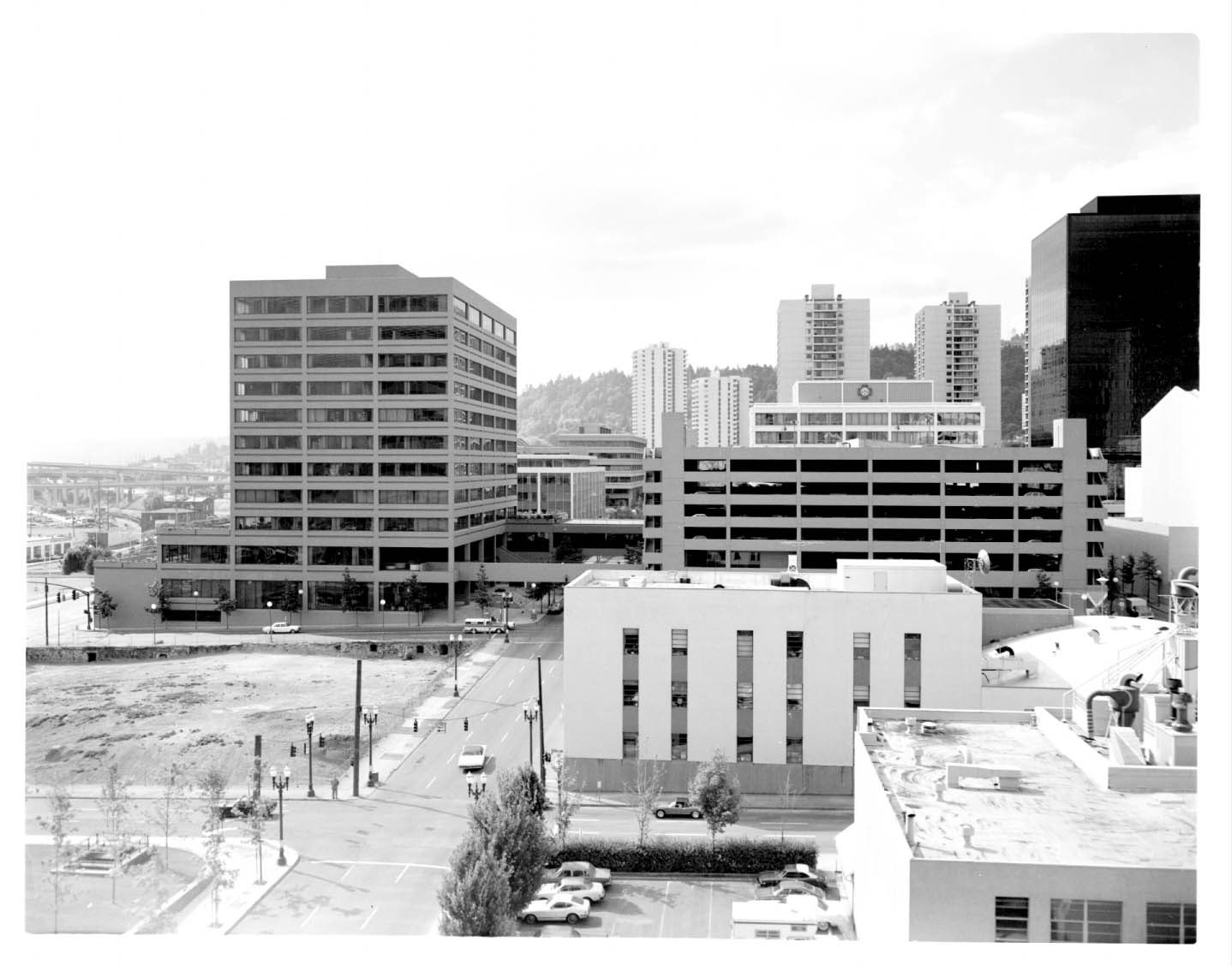


 OREGON REAL ESTATE ROUND TABLE