Tag: Portland

  • Exploring “The Other Oregon”: A Forgotten Landscape Uncovered


    When people think of Oregon, lush rainforests, dramatic coastlines, and Portland’s urban charm often come to mind. But Thomas R. Cox’s The Other Oregon: People, Environment, and History East of the Cascades invites us to look beyond the well-trodden western side of the state and discover the complex, often overlooked story of eastern Oregon.

    In this sweeping regional history, Cox paints a vivid picture of the arid lands east of the Cascade Range—a region shaped as much by its isolation and rugged beauty as by its people’s efforts to thrive in it. From Native American stewardship to ranching, mining, and federal land policies, Cox unpacks how economic, environmental, and political forces have converged to define this “other” Oregon.

    One of the book’s strengths is how it blends environmental history with social and political analysis. Cox doesn’t just catalog events; he explores how relationships between people and land evolved under pressure-from westward expansion to droughts, wars, and industrial shifts. His deep research and narrative style bring to life the settlers, indigenous communities, and conservationists who each played roles in shaping this landscape.

    Reading The Other Oregon is a reminder that histories aren’t just made in cities or along coastlines. They unfold in high deserts, ranchlands, and river valleys too. Cox’s work is more than a regional history—it’s a call to recognize and respect the complexity of rural spaces and the often unheard voices of those who live there.

    Whether you’re a student of history, an environmentalist, or just someone curious about the American West, this book will leave you with a deeper appreciation of eastern Oregon and a more nuanced understanding of the balance between people and place.

    Get the Book here: https://amzn.to/3HnfMUb

    Or visit our BookStore: https://vanportoregon.com/amazon-bookstore/

  • It Happened In Oregon


    Stories That Shaped the Beaver State

    If you’ve ever been curious about the rich, rugged, and often surprising history of Oregon, It Happened In Oregon by James A. Crutchfield offers an engaging doorway into the past. Part of the popular It Happened In series, this book brings together some of the most fascinating episodes and personalities that have shaped the Beaver State into what it is today.

    Crutchfield, a respected historian and storyteller, doesn’t just recount dates and facts—he brings Oregon’s past to life. From dramatic natural disasters and pioneering feats to curious oddities and legendary figures, each chapter focuses on a specific event or individual that left a mark on the region. You’ll read about explosive volcanoes, gold rush chaos, haunted lighthouses, and the brave souls who settled a wild frontier.

    Whether you’re a lifelong Oregonian, new resident, or just someone with a love for regional American history, this book offers something for everyone. It’s perfect for travelers, educators, students, or anyone looking to connect with the deeper stories that often go untold in traditional textbooks.

    Why read It Happened In Oregon?

    Short, accessible chapters make it easy to read on the go

    Offers a unique mix of historical depth and narrative storytelling

    Highlights both well-known and overlooked events in Oregon’s history

    Ideal for history buffs, armchair travelers, and curious minds

    Crutchfield reminds us that history isn’t just about what happened—it’s about who made it happen, and how it continues to shape the world around us.

    Where stories live, and readers belong. Explore your next chapter at Vanport Bookstore : https://vanportoregon.com/amazon-bookstore/

    Or get the book directly from here: https://amzn.to/4mHRowt

  • A Wild Ride Through Portland’s Past: Reviewing Storied & Scandalous Portland, Oregon


    If you think Portland’s weirdness started with food trucks and quirky TV shows, Joe Streckert has news for you. In his book Storied & Scandalous Portland, Oregon: A History of Gambling, Vice, Wits, and Wagers, Streckert digs deep into the city’s smoky past, unearthing tales of mischief, mayhem, and the colorful characters who made Portland what it is today.

    This isn’t your typical history book. Streckert, known for his engaging writing and deep love for Portland’s eccentricities, tells the city’s story through its vices, gambling dens, brothels, con artists, and hard-drinking politicians. It’s a book that embraces the idea that history isn’t just dates and dusty documents-it’s about people, personality, and, in Portland’s case, plenty of scandal.

    What makes the book shine is its balance between entertainment and education. You’ll meet legendary figures like Bunco Kelley, the infamous shanghai artist who kidnapped people for ship crews, and follow the evolution of Portland’s underground from 19th-century opium dens to mid-century speakeasies. Streckert writes with wit, but never loses sight of the broader social and historical context.

    Whether you’re a history buff, a true crime aficionado, or just a Portlander curious about your city’s shadier roots, Storied & Scandalous delivers. It’s the kind of book that makes you want to wander through Old Town and imagine what once happened behind those brick façades.

    A must-read for anyone who enjoys a good story, a little scandal, and a fresh take on Portland history. Joe Streckert proves that the City of Roses has always had a wild streak and he tells it with flair.

    Get the book here: https://amzn.to/4mLmd3h

    BOOKSTORE: https://vanportoregon.com/amazon-bookstore/

  • Unearthing Forgotten Stories: Exploring Ghost Towns of the Pacific Northwest


    If you’ve ever wandered off a forest road and stumbled across a crumbling foundation or rusted-out mine shaft, you know the strange magic of ghost towns. These remnants of boom-and-bust settlements whisper forgotten stories from the Pacific Northwest’s wild past—and a new book is helping to bring those voices back.

    In Ghost Towns of the Pacific Northwest: Your Guide to the Hidden History of Washington, Oregon, and British Columbia, author Philip Varney (with contributions from photographer John Drew) invites readers on a journey into the shadows of history. This is no dry historical record, it’s a vivid, photo-rich travel companion designed for curious adventurers, amateur historians, and weekend road-trippers alike.

    More Than Just Empty Buildings

    This book covers over 50 ghost towns and former mining hubs, each with its own backstory of ambition, collapse, and resilience. You’ll visit the skeletal remains of gold rush settlements in British Columbia, explore the weather-worn logging towns of the Olympic Peninsula, and learn about once-bustling Oregon communities now slowly being reclaimed by nature.

    Each entry includes directions, historical background, and what remains on site-perfect for those who like to blend history with hiking. The book also includes stunning photographs that capture the eerie beauty of deserted streets, moss-covered ruins, and rusting machinery.

    A Portal to the Past

    What sets this guide apart is its thoughtful blend of storytelling and practical guidance. Varney doesn’t just catalog abandoned sites-he brings them to life. You’ll meet characters who once shaped these towns, discover how local industries rose and fell, and come away with a deeper understanding of the forces that carved the Pacific Northwest into what it is today.

    Plan Your Own Ghost Town Road Trip

    Whether you’re planning a summer road trip or just love regional history, Ghost Towns of the Pacific Northwest is a perfect addition to your bookshelf or glovebox. It encourages a slower kind of travel—one rooted in curiosity, reflection, and respect for what came before.

    So pack a map, a camera, and maybe a flashlight-there’s more out there than you think. And thanks to this book, you won’t be traveling entirely alone.

    Available at our bookstore: https://vanportoregon.com/amazon-bookstore/
    Or you may get this book directly from Amazon: https://amzn.to/3FHu41d

  • Discover Jacksonville’s Story in Pictures: A Look at Images of America: Jacksonville by Margaret LaPlante


    If you’ve ever wandered through the streets of Jacksonville, Oregon, and felt the echo of the past in its old wooden buildings or quiet, shaded roads, you’re not alone. In her captivating book Jacksonville (Images of America), author and historian Margaret LaPlante takes readers on a visual journey through one of Oregon’s most charming and historically rich towns.

    Published as part of Arcadia Publishing’s well-loved Images of America series, this book is a nostalgic tribute to Jacksonville’s gold-rush roots, frontier resilience, and cultural evolution. Through over 200 vintage photographs, many of which come from private collections and local archives, LaPlante tells the story of a town that once bustled with miners, merchants, and pioneers.

    What’s Inside?

    • The 1850s gold rush that put the town on the map
    • The rise and fall of the railroad that changed its fate
    • Personal stories from early residents
    • The preservation efforts that turned Jacksonville into a National Historic Landmark

    The book is organized thematically and chronologically, covering key moments in Jacksonville’s history:

    Every page pairs historical images with thoughtful captions that provide just enough context to bring the photos to life. You don’t have to be a historian to appreciate it—LaPlante writes with accessibility and heart.

    Why It Matters

    Jacksonville isn’t just a town-it’s a snapshot of the American West in transformation. While many former boomtowns faded into ghost towns, Jacksonville survived thanks to local efforts to preserve its character. This book captures that spirit and gives readers a rare chance to see how daily life looked more than a century ago.

    Whether you’re a history buff, a Southern Oregon local, or simply someone who enjoys flipping through old photographs, Jacksonville (Images of America) is a gem. It’s also the perfect companion for a walking tour of the town, helping you see beyond the modern-day storefronts to the stories etched into every brick and beam.

    Where to Get It:

    Get it from our Boorkstore: https://vanportoregon.com/amazon-bookstore/
    Or get it here: https://amzn.to/4kPOUdN

  • Real Estate with Purpose: A Review of Real Estate Bestie Devotional by Rosemary Lewis


    In the fast-paced world of real estate, it’s easy to get caught up in deals, deadlines, and digital distractions. But what if your biggest asset isn’t your network or your negotiation skills – it’s your faith?

    That’s exactly what Rosemary Lewis reminds us in her powerful new book:
    Real Estate Bestie Devotional: 40 Days of Seeking God First in Life and Business.

    What Is It?

    This devotional is more than a spiritual supplement – it’s a daily reset button for real estate professionals who are serious about building their business on a solid, God-centered foundation. Designed as a 40-day journey, each entry provides:

    • A meaningful Bible verse
    • A short, relatable devotional message
    • A real estate-specific reflection
    • A call to action to align your mindset, work ethic, and goals with God’s Word

    Whether you’re a brand-new agent or a seasoned broker, this book meets you where you are.

    Why It’s Different?

    There are plenty of devotionals out there — but very few speak directly to the unique challenges and pressure points real estate professionals face:

    • The emotional rollercoaster of inconsistent income
    • The temptation to compare your journey to someone else’s highlight reel
    • The pressure to be “always on” for clients and your business

    Rosemary Lewis understands this world because she lives it. She brings not only wisdom from scripture but also real talk from experience and that’s what makes this devotional so impactful.

    Where to Get It?

    You can find Real Estate Bestie Devotional in our bookstore: https://vanportoregon.com/amazon-bookstore/

  • Rediscovering Portland’s Legacy: A Powerful New Biography on Bill Naito


    Portland has long been shaped by bold thinkers, visionary leaders, and everyday heroes who saw potential where others saw obstacles. One of the most inspiring among them was Bill Naito — a man whose legacy still echoes through the streets, parks, and civic institutions of the city he helped transform. Now, in a compelling new biography by Erica Naito-Campbell, his story is finally being told in full.

    Portland’s Audacious Champion: How Bill Naito Overcame Anti-Japanese Hate and Became an Intrepid Civic Leader is more than a biography – it’s a testament to resilience, civic pride, and the power of community-driven leadership.

    Through meticulous research and personal insight, author Erica Naito-Campbell – Bill Naito’s granddaughter- paints a vivid portrait of a Japanese American entrepreneur and activist who faced systemic discrimination with dignity, determination, and visionary action. From surviving the racism of wartime America to revitalizing downtown Portland and championing public spaces, Bill Naito’s journey is one of courage, creativity, and a deep love for his city.

    This is a must-read for Portlanders, history lovers, and anyone looking to be inspired by a story of perseverance and impact. Whether you’ve walked past the Naito Parkway signs or visited the beloved Saturday Market he helped preserve, this book will deepen your appreciation of one man’s quiet but profound influence on the cityscape.

    Get your copy today and discover the audacious heart behind Portland’s civic spirit.

    Get it here: https://amzn.to/43LpFSR
    Visit our Bookstore for more books: https://vanportoregon.com/amazon-bookstore/

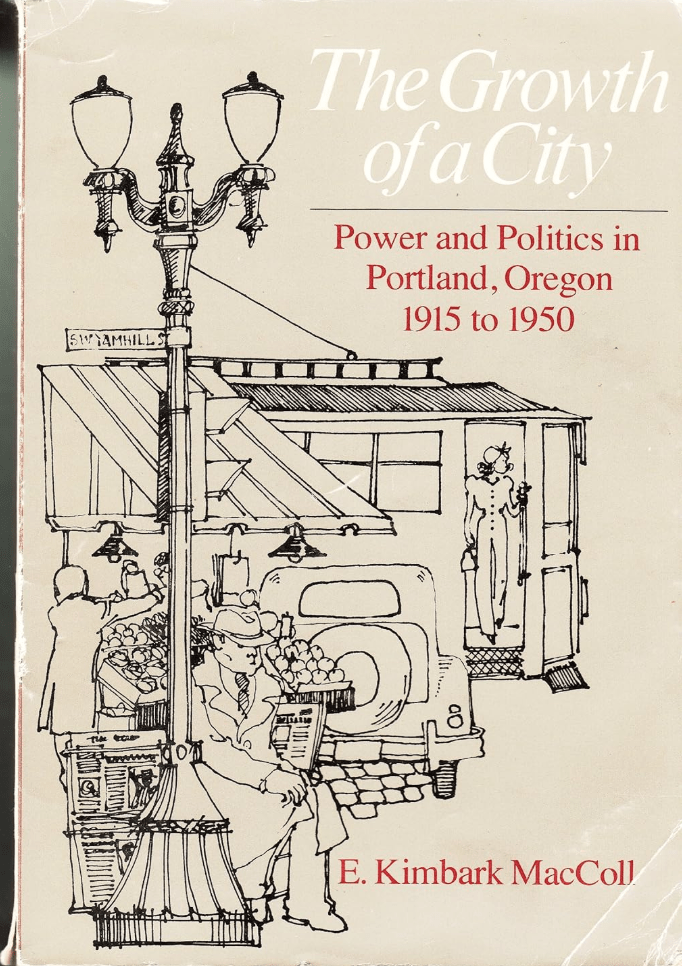
  • Uncovering the Power Behind Portland: A Look into The Growth of a City


    If you’ve ever strolled through the streets of Portland, Oregon, and wondered how the city came to be the vibrant, complex place it is today, you’re not alone. Fortunately, historian E. Kimbark MacColl has done the heavy lifting for us. His acclaimed book, The Growth of a City: Power and Politics in Portland, Oregon, 1915–1950, offers a rich and revealing look into the forces—political, social, and economic—that shaped Portland during a period of dramatic transformation.

    This volume is the second in MacColl’s renowned trilogy on Portland’s political history, and it stands as a crucial chapter in understanding how the city evolved from a relatively small urban center into a major hub of the Pacific Northwest. Far from a dry recounting of dates and names, The Growth of a City dives deep into the personalities, power struggles, and behind-the-scenes decisions that influenced everything from infrastructure development to racial dynamics and labor relations.

    Whether you’re a student of history, a curious Portland resident, or someone interested in urban politics and planning, this book offers valuable insights. MacColl’s meticulous research and compelling narrative style bring early-20th-century Portland to life, highlighting both its progress and its growing pains.

    With modern cities facing many of the same issues—inequity, housing challenges, and debates over governance—The Growth of a City is more than a history lesson. It’s a lens through which we can better understand today’s political landscapes.

    Don’t miss the opportunity to explore this essential piece of Portland’s past!!

    Get it here: https://amzn.to/3HAs1MY
    Or check our Bookstore: https://vanportoregon.com/amazon-bookstore/

  • Step Back in Time with Historic Baker City, Oregon: A Journey Through the Past


    For anyone who’s ever strolled down Main Street and admired the brick storefronts or wondered about the lives behind Baker City’s grand historic homes, a new book offers the answers you’ve been looking for. Historic Baker City, Oregon, lovingly compiled by the Baker County Friends of the Library, is more than just a local history, it’s a tribute to the soul of a community.

    Through carefully selected photographs, engaging stories, and fascinating historical detail, this book captures the heart of Baker City’s past. From its booming days during the gold rush and the arrival of the railroad to its present-day charm as a preserved historic treasure, the city’s vibrant story unfolds page by page.
    A Community Effort to Preserve the Past

    Created by the dedicated volunteers of the Baker County Friends of the Library, this project reflects a deep commitment to local heritage. Proceeds from the book go directly to support the Baker County Library District, so every purchase helps preserve both history and access to knowledge.

    What You’ll Find Inside:

    -A compelling narrative written with both care and accuracy
    -Over 100 archival photos, many rarely seen before
    -Stories of local pioneers, entrepreneurs, and everyday citizens .
    -Highlights of iconic buildings and landmarks

    Whether you’re a history enthusiast, a Baker City resident, or someone who simply appreciates a well-told story, Historic Baker City, Oregon is a book to treasure.

    Where to Buy: https://amzn.to/43N6g40

    Bookstore: https://vanportoregon.com/amazon-bookstore/

  • A Look at Lost Portland, Oregon


    Portland is a city that wears its quirkiness with pride—but beneath the murals, microbreweries, and modern skyline lies a layered history that many never get to see. In Lost Portland, Oregon, author and historian Val C. Ballestrem takes readers on a fascinating tour through the city’s lost landmarks and fading architectural heritage.

    Ballestrem, a respected local historian and education manager at the Architectural Heritage Center, masterfully combines historical storytelling with rare photographs and archival material to bring the city’s past to life. The book highlights more than just demolished buildings—it paints a picture of a Portland that once was, from long-forgotten theaters and hotels to neighborhoods forever changed by urban renewal, highway construction, and shifting social priorities.

    Each chapter serves as a window into a different piece of Portland’s past. You’ll read about the grand Marquam Grand Opera House, the razed South Portland neighborhood, and other vanished spaces that were once cornerstones of the community. Ballestrem doesn’t just recount facts—he tells stories, making Lost Portland, Oregon a compelling read for anyone curious about how cities evolve, what gets preserved, and what slips away.

    This book is ideal for history buffs, architecture lovers, and Portland residents who want to better understand the city’s ever-changing landscape. It’s also a call to think about preservation—not as nostalgia, but as a way to honor the character and complexity of a city’s identity.

    Why Read Lost Portland, Oregon?

    Discover hidden stories behind well-known neighborhoods

    Learn about the city’s architectural history and changing skyline

    Explore thought-provoking discussions on preservation and progress

    Whether you’re a lifelong Portlander or a newcomer intrigued by the city’s roots, Lost Portland, Oregon is a beautifully curated journey into the heart of what once was—and a reminder of why remembering matters.

    Available now: https://amzn.to/3FH8OIY

    You may also visit our bookstore for more books: https://vanportoregon.com/amazon-bookstore/

  • Oregon’s Newest Rental Laws

    Oregon’s Newest Rental Laws


    On June 29, the Oregon legislature, in a non-public meeting, approved HB 4213. The most well-known item: no evictions for non-payment of rent through September 30.
    But, this law, like so many anti-real estate investor laws passed in the last four years, has many nuances that can trap any landlord. And the penalties to investors are quite severe.
    MOST IMPORTANT: If you have any tenants not paying, consult a good landlord-tenant attorney. Do NOT try to do it yourself.
    If you have lost rent since March 1, you are probably eligible for some relief:
    I looked this over and it appears it applies to landlords who have lost rent due to the Coronavirus and shutdown.
  • GaSandra Carlson of Envoy Mortgage talks about the FHA 203 K Loan


    GaSandra Carlson of Envoy Mortgage talks about the FHA 203 K Loan. This is a Rehab loan that allows buyers to buy a home that needs some work and borrow enough money to Rehab the home. This loan can also be used a tool to refinance and rehab your home/. After you watch this video. If you have any questions please feel free to contact GaSandra at (503) 967-5099


    GaSandra Carlson
    Sales Manager
    NMLS # 487425
    (503) 967-5099 Office
    (503) 351-1802 Cell
    www.GaSandraCarlson.com


  • Multnomah County Property Tax Appeal Process


    This information will help you decide how to appeal your property value to the Board of Property Tax Appeals (BoPTA). Your appeal must be postmarked or delivered by December 31.

    1. Deciding to appeal
    2. Submit your appeal
    3. Prepare for your hearing
    4. What to expect at the hearing
    5. Hearing decision

    Use this Glossary of Value Terms to help understand your tax bill and prepare your appeal.

    Deciding to appeal

    Before you file an appeal, please contact our office (via live chat(link is external), phone or email) for more information about how your property value was determined. Our appraisers will help you understand your value and if it should be adjusted.

    You may file appeals for the following reasons:

    • Value: You can appeal the current year’s Real Market Value (RMV), Specially Assessed Value (SAV) or Assessed Value (AV) on both real and personal property accounts. Personal property includes business property, floating property and manufactured structures.
    • Exception event: If improvements have been made to your property (for example updating or remodeling) and you believe that the amount the Assessor has increased the value of your property is too high, you may appeal the amount of the increase that is associated with the improvements (called an “exception event”).
    • Penalty: If you disagree with a penalty assessed to you for late filing of your real or personal property return, you may petition BoPTA to waive the penalty.

    When considering an appeal, keep in mind:

    • A reduction in Real Market Value of your property may not result in tax savings.
    • It is your responsibility to prove that the value the Assessor has placed on your property is too high.
    • BoPTA can only hear appeals of the current tax year values. It does not have authority to consider appeals for any other tax years.

    BoPTA cannot:

    • Consider hardship as a factor in establishing value
    • Set the amount of tax you owe
    • Consider a sharp increase in value in a single year to be a valid reason for appeal
    • Regard lack of normal property maintenance as a reason for appeal (however, severely deferred maintenance and structural problems are considered)
    • Consider testimony on tax rates or the fairness of the tax system.

    Submit your appeal

    When can I appeal?

    After your current year property tax statement is available, you have until December 31 to submit your petition to The Board of Property Tax Appeals (BoPTA). BoPTA can only consider petitions for the current tax year value.

    Your petition must be postmarked or delivered by December 31.

    • We use the U.S. Postal Service postmark to determine timeliness of filing. A postage meter imprint (e.g. Pitney-Bowes) is not considered a postmark.

    Hearings will take place between the first Monday in February through April 15. You will be notified by mail of your hearing date and time.

    Download appeal forms and petitions

    Pick up forms at our office

    501 SE Hawthorne Blvd, Suite 175
    Portland, OR 97214
    Phone: 503.988.3326

    Email form request to BOPTA@multco.us(link sends e-mail)

    How do I submit my appeal and what is the fee?

    You must submit a separate completed petition for each account. The filing fee is $30.00 per account.

    If we receive your petition without the filing fee, you have 20 days from the date of notification to submit the fee or the petition will be dismissed.

    Appeals are accepted by mail or in person only. Email or fax submissions are not accepted.

    By mail

    Board of Property Tax Appeals
    PO Box 5007
    Portland, OR 97208-5007

    In person

    501 SE Hawthorne Blvd, Suite 175
    Portland, OR  97214

    How do I appeal Business Personal Property?

    Business Personal Property value for the current tax year may be appealed to BoPTA. Paperwork must be postmarked no later than December 31.

    Late filing penalties for business personal property may also be appealed to BoPTA separately.

    The cost for each appeal is $30.

    Business Personal Property Appeals forms

    Personal Property Petition (468.98 KB)

    Waiver of Late Filing Penalty (152.42 KB)

    Prepare for your hearing

    When will my hearing be scheduled?

    Hearings start in mid-February and run until April 15. Hearings take place in 10 minute increments from 9 am-2 pm, Monday-Thursday at the Multnomah Building (501 SE Hawthorne Blvd, Portland, OR 97214).

    • Notices of hearing will be mailed 5-10 days in advance of the scheduled time. You may also call or chat our Customer Service office(link is external) to find out your scheduled hearing time.
    • Hearing times cannot be rescheduled. If, after your hearing is scheduled, you find you cannot attend, you may send a qualified representative. To designate a representative, fill out and submit the Authorization to Represent form(link is external).
    • If you are in need of special assistance, please call or chat our office and we will be able to help you.

    What evidence do I need?

    Generally, to be successful in your appeal, you must provide evidence of the market value of your property on January 1 of the assessment year. A strong case requires careful preparation. Remember, it is your responsibility to prove that the Assessor’s value is too high.

    The only evidence BoPTA can consider is what you provide with your current appeal.  Evidence from previous appeals will not be considered. You may send your evidence with your petition, or bring it at the time of the hearing.

    Here are some examples of evidence BoPTA may consider:

    • Documentation of an arm’s-length (openly-marketed) sale of your property that occurred close to January 1 of the assessment year.
    • A fee appraisal dated close to January 1 of the assessment year which reflects the property’s value.
    • Proof that the property has been listed for sale on the open market for a reasonable period of time at a price below the real market value on the tax roll.
    • A comparison of properties similar to yours in location, size and quality that have sold close to January 1 of the assessment year. If there are differences between properties, the differences must be accounted for in the comparison of values.
    • Cost of new construction that occurred close to January 1 of the assessment year and was performed by a professional contractor.
    • Cost to repair your property. You must provide written estimates of the cost of the repairs.
    • For commercial property, documentation of income and expense information or a comparable sales analysis.

    If you wish to submit comparable sales as evidence, an example of a Comparable Sales Grid is available.

    Any evidence you provide to BoPTA will not be returned to you.  If you wish to keep the original documents, you may submit copies to the Board.

    What to expect at the hearing

    A typical residential hearing is limited to a total of 10 minutes. All hearings in which a petitioner (or representative) is present are recorded. Most recordings are available for review upon request. During this 10 minutes you will:

    • Introduce yourself and identify your property. The BoPTA Chair will announce the current value and your requested value, and will confirm the size, location and type of property under appeal.
    • You will then make a statement supporting your requested value.
    • Describe each piece of evidence you present. BoPTA members may ask questions during your presentation.

    You must make your statement, present your evidence, and allow for questions within the 10 minute period. Remember that BoPTA is concerned with property values for the current assessment year, not large increases over last year’s value or increases in tax amounts.

    The process is informal. You should expect to be treated with courtesy. The Chair must, however, adhere to the time schedule and you will be asked to cooperate in this regard.

    Who is on the Board of Property Tax Appeals (BoPTA)?

    BoPTA members are private citizens appointed by the Multnomah County Board of County Commissioners. They are not professional appraisers, but have training, experience and knowledge in property valuation.

    BoPTA members are not part of the Assessor’s Office. BoPTA members are not part of the Assessor’s Office and they play no role in setting any of the values on your property.

    BoPTA may be thought of as a panel which decides the value of your property based on the evidence you present.

    Hearing decision

    When can I expect a decision?

    BoPTA hears all the day’s testimony before making any decisions. The decision-making process is typically between 2-4 pm. You are welcome to observe this process, however you will be unable to comment or offer any further testimony.

    BoPTA’s decisions are not available by telephone.

    Whether you are present for the decision-making process or not, a written Board order will be mailed to you or your representative within 8-10 business days after the hearing.

    What if I disagree with the BoPTA’s decision?

    Information and instructions on appealing BoPTA’s decision to the Oregon Tax Court will be included with the written decision.  For more information, visit the Oregon Tax Court’s website(link is external).

  • Interview with Jeff Foody of Reverse Mortgages Northwest


    Jeff Foody answers some important questions regarding Reverse Mortgages.   Reverse Mortgages is not for everyone, but for those that need its flexibilities it can be a life-changing opportunity.    It is important that people that seeks a Reverse Mortgage work with Loan Officers that understand the  loan product as much as Jeff Foody does and that will not be easy.    After watching this video if you still have questions please feel free to contact Jeff .  I am sure he will be able to answer your questions and help you learn if this loan product is good fo your situation or not.


    Jeff Foody
    Reverse Mortgage North West
    503-427-1667
    http://www.reversenorthwest.com

  • Tips To Make Your Home More Eco-Friendly,


    Tips To Make Your Home More Eco-Friendly


    Trying to make your home more eco-friendly is easier than you might think. There are several small things you can do, in each room in your house, to make your carbon footprint a much smaller one. The more we do to go green in our homes the better off our environment will be.

    With changes in the climate a serious threat to our way of living, it is the responsibility of every person to make changes to their everyday lives that will have a greener impact and help to slow down the effects of global warming. One of the easiest places to start is by making your home more eco-friendly.

    Going green at home does not require you to spend lots of money; in fact, it can actually save you money! Whether you take on small projects or large overhauls, every step we take towards being more energy conservative is one step closer to making the world a better place for the next generation. Here are some tips to help you get started and make your home more eco-friendly.


    Living Room Energy Savings

    The living room is typically one of the most used rooms in the home, and often responsible for a large portion of the energy that your home uses. Make a more energy efficient living space and go greener by following these simple to install tips:

    • Replace the light bulbs: Swapping your incandescent bulbs for energy-saving Light-Emitting Diodes (LED) or Compact Fluorescent Lights (CFL) bulbs will save you money on your electricity bill as well as being better for the environment. It is estimated that CFL bulbs use roughly 70% less energy than traditional incandescent ones.
    • Unplug your appliances: Even when your TV or games console is switched off or on standby it uses electricity. Get into the habit of unplugging things at the end of the day to save energy and money. Take a quick walk through your home and it will become abundantly clear how many devices you can unplug to conserve energy.
    • Use draft excluders: When all the family is in the living room it is a good idea to heat that room and use a draft excluder to prevent heat escaping under the door. They come in a variety of colors and styles too.
    • Have carpets fitted: Carpet will make your living room feel warmer and cozier, but if full carpet is not an option, laying a rug on your wooden floor can have the same effect. The extra insulation can help reduce heating costs.
    • Install dimmer switches: Turning the lights down low creates a nice cozy atmosphere and uses less energy, which will also save you money. The savings are dependent on how dimly you light the room and the type of light bulbs you use.
    • Open the drapes: During the day when the sun is shining, open the drapes and let the sun warm your home naturally; this even works in winter. Using natural lighting is an easy approach to conserving energy.
    • Close the drapes: When the sun goes down and your heating comes on, close the drapes to prevent heat from being lost through the windows. This simple step can reduce heat loss by as much as 15% in an average home.


    Kitchen Energy Tips

    The kitchen is the hub of many American homes, and it is often packed full of energy-guzzling gadgets and appliances. Here are some ways you can cut down your kitchen energy usage:

    • Cook in batches: Cooking meals in batches and freezing portions will save energy, time, and money. Defrost and reheat the meals in the microwave throughout the week because microwaves use less energy than conventional stoves. How much less? The energy savings typically start at 30 percent and go up based on usage.
    • Choose low energy appliances: Many older models of dishwashers, fridges, and freezers  are not very energy-efficient. When they need replacing, opt for low energy ones instead. Look for the Energy Star logo to improve energy efficiency, maximize your eco-friendly efforts, and have the kitchen you always wanted.
    • Clean your refrigerator coils: Dust and grime can build up on the coils, preventing your fridge from working as efficiently as it should. Clean the grime away and it will use less energy.
    • Place your refrigerator in the shade: If your fridge is in direct sunlight it will be a couple of degrees warmer, have to work harder, and use more energy to stay cool inside. Every little bit of energy conservation helps.
    • Fill your dishwasher: Running your dishwasher uses around half the water it takes to wash the dishes by hand. Ensuring it is full before running will be more time and energy efficient. Using it in energy-savings mode, if available, will help cut consumption even more.
    • Compost your food waste: Rather than throwing your leftovers and food scraps down the garbage disposal, collect them in a small bin in the kitchen, and invest in a compost bin for your garden. It will help keep you on track with your outside eco-friendly options.
    • Keep your freezer full: A full freezer will run more efficiently than a half-empty one. Try filling it with those batch-cooked meals to save time throughout the week.


    Bedroom Eco-Friendly Advice

    The bedroom is another room that you spend a lot of your time in, both sleeping and relaxing, so make sure you follow these tips to keep things eco-friendly in there:

    • Use eco paints: When it comes to redecorating your bedroom choose eco-friendly paints with low levels of volatile organic compounds (VOCs). Eco-friendly paints are better for the environment and better for your health. Water based paints contain less VOCs than oil based paints.
    • Choose a non-toxic mattress: When it is time to replace your old mattress (every 7 to 10 years), choose a new one that has not been treated with synthetic chemicals or toxic materials. Choosing one made with organic cotton,  wool, or latex made from rubber tree sap, is a good way to be more eco-friendly and still get a good nights sleep.
    • Choose organic linens: Non-organic cotton accounts for around 25% of the world’s insecticide use, so switching to organically grown cotton sheets, or those made from sustainable bamboo fibers, is much better for the environment. They are also softer to the touch.
    • Ditch the air purifier: An air purifier makes the air in your bedroom cleaner to breath, but it also uses a lot of energy. Unless you have allergies or asthma, a houseplant or two in your bedroom will clean the air just as well without the constant hum.
    • Unplug your phone charger: Most of us charge our phones overnight next to our beds, and leave them plugged in constantly. Try to get into the habit of unplugging your charger each morning as it will still draw electricity from the grid whether it is charging your phone or not.


    Bathroom Energy Efficiency

    A great deal of energy is used in the purification of water before it reaches your bathroom faucets and shower. By cutting down on water usage you can help the environment. Here are tips to help you conserve energy in the bathroom:

    • Turn the faucet off: When you are brushing your teeth, do not leave the water running. Instead, fill a glass with water, turn off the faucet, and use the glass of water to rinse your mouth and wash your toothbrush. According to the EPA, this simple step can save up to 8 gallons of water each time you brush your teeth.
    • Fix that leaky faucet: Did you know that up to 48 gallons of water can be lost each week from a leaky faucet? All the more reason to get it fixed as soon as you notice it is leaking in order to prevent that water from unnecessarily being wasted.
    • Install a low flow shower head: You will not notice the difference in water flow, and you will still be as clean as a whistle, but you will be using a lot less water with each shower you take.
    • Install a water saving toilet: Or use a cistern displacement device to reduce the amount of water that gets flushed away each time. Depending on the model you replace, your savings could be up to 4 gallons per flush.
    • Do not flush every time: It is not always necessary to flush the toilet after every single use. If there is just you and your family in the house, flush it after every two or three trips instead and you will use a lot less water. Use common sense if you use this option.
    • Open the window: After showering, crack the window open to let the excess humidity escape. If it stays in the room it can lead to mold, which then creates a situation that may involve using harsh chemicals to clean away the mold or mildew.
    • Shower instead of bathing: Taking showers instead of baths typically uses up to 14% less water. It also takes less energy to heat the water for a shower than it does to run a hot bath.


    Going Green Around the House

    There are so many other ways that you and your family can make your home life much more eco-friendly. Some of these go green in the home tips include:

    • Recycle: There are so many everyday items that can be recycled, including all types of paper and cardboard, plastic bottles, glass bottles and jars, and aluminum cans. If you live in one of the eleven states with bottle bills, you can even redeem plastic bottles and aluminum cans for cash!
    • Have double glazing installed: Up to 25% of heat can be lost through the windows, but having double glazed windowsinstalled throughout your home will keep a lot more of the heat in, making your home feel much more cozy without the need to crank up the thermostat.
    • Wash clothes on a cold cycle: Using the cold cycle on your washing machine will still wash your clothes effectively, but it will save you energy and money too. The results might surprise you so give it a try.
    • Hang the laundry out to dry: Using a dryer is obviously a quicker way to dry your clothes, but they use a lot of energy. Make the most of warm or windy weather and hang your laundry outside to dry naturally.
    • Layer up before turning the heating up: If you are feeling cold, throw on a sweater or get under a blanket before you reach to turn the heating on or turn it up. Keep throws or blankets handy so you are not tempted to reach to the thermostat.
    • Switch to paperless billing: Choose to receive credit card statements and utilities bills via email rather than in the mail. Many companies even offer a discount on their services if you choose to view and pay your bills online. You can even get much of your snail mail delivered online if you ask.
    • Cut down on chemical use: Opt for chemical-free cleaning products, or better still, make your own! Ingredients that you already have in the cupboards, like baking soda, vinegar, olive oil, and lemon juice can be used to make a variety of cleaning solutions.
    • Install solar panels: They are not cheap, and it can take years to recoup the upfront costs, but if you live in a sunny climate and plan on living in the home long-term, they could be a great option. A decent reduction of power consumption is what you can expect if you install solar panels.

    There are lots of other ways that you can live a greener lifestyle, both in and out of the home, but adopting a few of the tips shared above is a great way to start. If you have children, try to get them into eco-friendly habits from an early age, as they are the ones that will benefit the most from taking care of the planet in the long run.


  • FHA EASES CONDOMINIUM PROJECT APPROVAL REQUIREMENTS: Temporary guidelines will increase number of condominium projects eligible for FHA approval


    WASHINGTON – The Federal Housing Administration (FHA) today published new guidelines under its condominium approval process intended to increase affordable housing options for first-time and low- to moderate-income homebuyers.  Effective immediately, FHA’s temporary guidance will streamline the agency’s condominium recertification process and expand the eligibility of acceptable ‘owner-occupied’ units to include second homes that are not investor-owned.    Read FHA’s mortgagee letter.

    These provisions will expire in one year and serve to revise FHA’s condominium approval process until the agency can implement a more comprehensive condominium rule change.  Today’s guidance:

    1. Modifies the requirements for condominium project recertification;
    2. Revises the calculation of FHA’s required owner-occupancy percentage; and
    3. Expands eligible condominium project insurance coverages.

    Streamline Condominium Recertification

    FHA-approved condominium projects require recertification after two years to ensure that the project is still in compliance with FHA’s eligibility requirements and that no conditions currently exist which would present an unacceptable risk to FHA.  For existing condominium projects seeking recertification, FHA will now only require applicants to submit documents reflecting any substantive changes since the project’s prior approval.

    Calculation of Owner-Occupancy

    The procedure for calculating the required owner-occupancy percentage (50 percent) is modified to allow units that are not investor-owned to be considered owner-occupied for the purpose of Condominium Project approval.  A condominium is considered to be owner-occupied provided they are not:

    • Tenant Occupied;
    • Vacant and listed for rent;
    • Existing (previously occupied), vacant and listed for sale; or
    • Under contract to a purchaser who does not intend to occupy the unit as a Principal Residence or Secondary Residence.  The term Principal Residence and Secondary Residence have the same meaning.

    Expansion of Eligible Condominium Project Insurance Coverage

    Homeowners’ Associations (HOAs) are required to maintain adequate “master” or “blanket” property insurance in an amount equal to 100% of current replacement cost of the condominium (exclusive of land, foundation, excavation and other items normally excluded from coverage). Insurance coverage for condominium project approval that consists of pooled policies for affiliated projects, state-run plans, or contains coinsurance obligations on the part of the policy holder is now permitted to satisfy this requirement.


    ###

    HUD’s mission is to create strong, sustainable, inclusive communities and quality affordable homes for all.
    More information about HUD and its programs is available on the Internet
    at www.hud.gov and http://espanol.hud.gov.

    You can also connect with HUD on social media and follow Secretary Castro on
    Twitter and Facebook or sign up for news alerts on HUD’s Email List.


  • Three Tips for Reducing Your Closing Costs if You’re Looking Forward To Buying a Home in the Spring


    Spring is approaching fast and it is usually the busiest time of the year for home buying. After a long and cold winter, many people are ready to enjoy the nicer weather and begin to shop for a new home. Spring is also the perfect time for home buying for families with children because it allows them to move during the summer without interrupting school.

    Home buying has costs associated with it other than the mortgage itself. Known as closing costs, these fees are a part of the home buying process and they are due at the time that the mortgage is finalized. Buyers, however, can negotiate these costs and reduce the expense with a little bit of effort and with the help of a good mortgage professional.

    If you are thinking of buying a new home in the spring here are three helpful tips to reducing your closing costs.

    Compare All of Your Mortgage Options

    If you’re using mortgage financing to cover some of the up-front purchase cost of your home you’ll have other closing costs to pay including lender fees, mortgage insurance and more. Be sure to compare all of your options with your trusted mortgage adviser to ensure that you’re getting the best possible deal and paying the least amount in fees and interest.

    You may also be able to save a bit on your closing costs by choosing a “no points” mortgage. In this type of mortgage you’ll end up saving on closing costs but you’ll be left paying a higher interest rate. Spend a bit of time doing the math to determine the best course of action.

    Third Party Fees

    Some of the closing cost fees will be associated with third party vendors that must perform required services. Home appraisals, title searches, and costs for obtaining credit reports are some of the items included in this area. While these may be a little harder to negotiate because the lender uses specific companies to perform these services, it does not hurt to ask if you can use your own appraiser or title search company.

    Zero Closing Cost Mortgages

    Buyers may also wish to inquire about a no closing cost mortgage. This type of mortgage eliminates all closing costs. The lender covers all of the closing cost fees in exchange or a slightly higher interest rate on the loan. In most cases the increase is less than one-quarter of a percent. This type of loan can be very helpful to buyers. Buyers can then use the money that they saved on closing costs to help with the move.

    With a little preparation, you can find the best mortgage product for the up-coming spring season. Be sure to contact your experienced mortgage professional, as they will be able to help you find the right mortgage for your specific needs with the lowest out-of-pocket expenses.

  • The Advantage of Property Management, By Troy Rappold


    In business, the slogan “Just Do It!” rings true and will serve you well. In the world of Property Management this is applicable as well. After all, we are trying to grow our business and be successful when we manage your asset wisely and efficiently. However, more often than not our slogan is “Just Do the Right Thing!”

    As property managers we work with many vendors who complete work on our properties. We want quick, quality repairs, and at a good price for our clients. Sometimes this requires tough conversations. Navigating this world is our expertise and it is part of why you rely on us.  Our fiduciary responsibility is always you, the client.

    The other piece of the puzzle we have to navigate is relations with tenants. Our job is to provide clean, safe, well-maintained housing. However, and this might come as a shock, sometimes tenants can have expectations that are out of line. Just because a kitchen counter has a scratch on it doesn’t mean we need to replace the entire counter top with new, beautiful granite from Brazil. Often times a property manager has to say “no” in the most professional and courteous way possible.

    Real Estate management is an active, engaging industry. One cannot just buy an investment property and watch it appreciate or mature, like treasury bonds. Having the right management in place is just as important as buying the right property at the right price. We have the expertise and experience to navigate the difficulties and pitfalls for you. Here at Rappold Property Management we take our job very seriously and we manage your property as if it were our own.


    Troy Rappold
    Rappold Property Management, LLC
    1125 SE Madison Street, suite #201
    Portland, OR 97214
    Phone: 503-232-5990
    Fax: 503-232-1462
    http://rappoldpropertymanagement.com


  • Landlords: Renters That Smoke, by Troy Rappold, Rappold Property Management, LLC


    The ability to smoke in public and at apartment communities has been under attack for years. But what about rental homes? Often times an owner plans to rent their home for only a year or two. Certainly the owner does not want to receive the house back with the smell of cigarette smoke still lingering in the house. Even if the renter was a model tenant in all other respects, cigarette smoke can be very destructive. Smoking turns walls yellow (new paint job $1,200), it destroys carpets ($1,500), and it requires a deeper cleaning, perhaps with a deionizer ($500). The cost of all this stress…priceless.

    The best approach? In all of our homes we have a no smoking policy. However, we do allow the renter to smoke outside, perhaps on the porch or deck. However, this issue can be a hard one to enforce. What if it’s cold outside? Who wants to stand outside when it’s only 35 degrees? The renter is easily tempted to stand inside the house or close to an open window and light up. Inevitably, smoke gets in the house and the home owner smells the evidence. A good suggestion is to do an inspection within the first month or two of a new lease if you know the renter smokes. Catch the problem early. Then do another inspection a few months later to make sure. If you detect smoke after the tenant moves out, a landlord can charge the tenant for the remediation of the smell. But this can be a tricky proposition. It is always best to be pro-active and keep this issue from becoming a possible expense.  It is less ideal to react and pursue a vacating tenant for money.

    You can always call Rappold Property Management with questions about your single family home investment.

    Troy Rappold
    Rappold Property Management, LLC
    1125 SE Madison Street, suite #201
    Portland, OR  97214

    Phone: 503-232-5990
    Fax: 503-232-1462


  • 4 Tips On Giving Your Mudroom A Makeover, by Steph Noble, Northwest Mortgage Group


    4_Tips_On_Giving_Your_Mudroom_A_Makeover

    From crunched-up leaves stuck to bottoms of shoes to bulky coats shed as soon as kids walk through the door, mudrooms are ideal for keeping outdoor dirt, wet clothing and outerwear from being strewn throughout your home.

    Mudrooms not only keep the rest of your house clean, but they also designate a spot for those last-minute grabs, such as coats, umbrellas and purses, when you’re running out the door.

    These rooms are great catchalls. However, an organized mudroom can make your life and those hectic mornings much less stressful. Below are smart tips for getting your mudroom ready this fall.

    1. Put In Seating

    After shedding outer layers, the next thing anyone wants to do after coming inside on a cold, wet day is to take off their mucky shoes. So make sure there is a built-in bench or convenient chair for people to sit down and tend to their tootsies. Whether taking off or putting on shoes, it makes life a little more comfortable.

    2. Install A Sink

    A mudroom is supposed to be the catchall for everything dirty from the outdoors. With this in mind, a sink for washing off the grime and mud makes sense. Then you can clean your clothing in the contained space without having to haul them to the kitchen sink or laundry room.

    3. Create Cubbies

    Even though this space is designated as a drop-off point before entering the main living space, you don’t want everything just thrown into one big confusing pile. Create individual cubbies for every person in your household. Each cubby should contain a shelf for purses and backpacks, hooks for coats and a low place for shoes.

    4. Splurge On A Boot Warmer

    While electric boot warmers can be a little expensive, you will definitely think it’s worth the money when it’s freezing outside and your shoes are damp. Electric boot warmers heat your shoes on pegs and dry them out at the same time. They also work well on gloves.

    Fall is a mudroom’s busy season; so get it in shape with the tips above. With all the coats hanging on their hooks, shoes in their cubbies and dirt contained to this designated space, your life will be a little more organized and much less stressful!


    Steph Noble
    Northwest Mortgage Group
    (503) 528-9800
    http://www.stephnoble.com
    http://www.nwmortgagegoup.com