Tag: Portland History

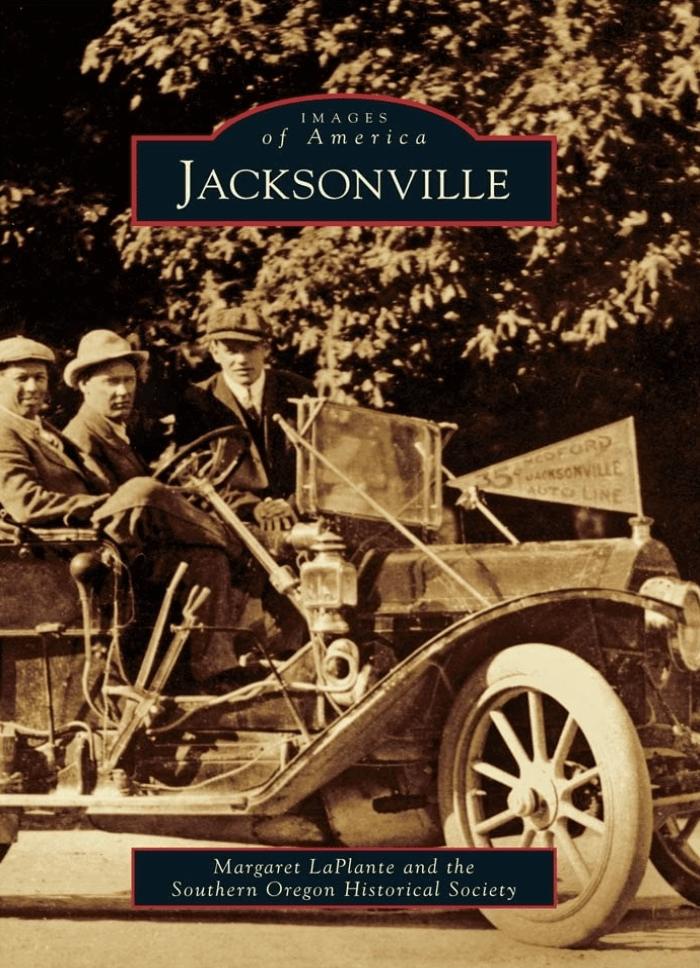
  • Discover Jacksonville’s Story in Pictures: A Look at Images of America: Jacksonville by Margaret LaPlante


    If you’ve ever wandered through the streets of Jacksonville, Oregon, and felt the echo of the past in its old wooden buildings or quiet, shaded roads, you’re not alone. In her captivating book Jacksonville (Images of America), author and historian Margaret LaPlante takes readers on a visual journey through one of Oregon’s most charming and historically rich towns.

    Published as part of Arcadia Publishing’s well-loved Images of America series, this book is a nostalgic tribute to Jacksonville’s gold-rush roots, frontier resilience, and cultural evolution. Through over 200 vintage photographs, many of which come from private collections and local archives, LaPlante tells the story of a town that once bustled with miners, merchants, and pioneers.

    What’s Inside?

    • The 1850s gold rush that put the town on the map
    • The rise and fall of the railroad that changed its fate
    • Personal stories from early residents
    • The preservation efforts that turned Jacksonville into a National Historic Landmark

    The book is organized thematically and chronologically, covering key moments in Jacksonville’s history:

    Every page pairs historical images with thoughtful captions that provide just enough context to bring the photos to life. You don’t have to be a historian to appreciate it—LaPlante writes with accessibility and heart.

    Why It Matters

    Jacksonville isn’t just a town-it’s a snapshot of the American West in transformation. While many former boomtowns faded into ghost towns, Jacksonville survived thanks to local efforts to preserve its character. This book captures that spirit and gives readers a rare chance to see how daily life looked more than a century ago.

    Whether you’re a history buff, a Southern Oregon local, or simply someone who enjoys flipping through old photographs, Jacksonville (Images of America) is a gem. It’s also the perfect companion for a walking tour of the town, helping you see beyond the modern-day storefronts to the stories etched into every brick and beam.

    Where to Get It:

    Get it from our Boorkstore: https://vanportoregon.com/amazon-bookstore/
    Or get it here: https://amzn.to/4kPOUdN

  • The Vanport Flood ( Images of America )


    Why Is Vanport’s Story Still Important Today?

    The book Vanport (Images of America) by Zita Podany offers a compelling visual history of Vanport, Oregon—a city that briefly thrived during World War II and was destroyed by the 1948 Columbia River flood. Part of Arcadia Publishing’s Images of America series, the book presents a collection of photographs and captions that chronicle the rise and fall of this once-vibrant community.

    Vanport was established in 1942 to house workers for the Kaiser Shipyards, accommodating over 40,000 residents in a city built in just over a year. It became Oregon’s second-largest city at the time. However, on May 30, 1948, a section of the dike along the Columbia River collapsed, leading to a devastating flood that submerged the city. The flood not only destroyed the city but also displaced its largely African American population, leaving them homeless.

    Nestled in the floodplain between North Portland, Oregon, and Vancouver, Washington, a housing project was built to help house World War II shipyard workers. Its very name, Vanport, is derived from Vancouver and Portland. When the United States entered the war, the demand for ships and for workers to build those ships became a huge priority. Workers were recruited from all corners of the United States. Portland had a serious lodging shortage, so much so that these workers lived in cars, tents, parks, and whatever shelter could be found. Vanport, built in a little over a year to house them, was a city that did not sleep. In its heyday, Vanport was the second-largest city in Oregon with a population of over 40,000 residents. It was a city with many firsts. It was a city that touched many lives in a very short period of time. And on May 30, 1948, it was a city that disappeared just as quickly as it came into existence, leaving a legacy that will not soon be forgotten.

    📚 Interested in diving deeper into Vanport’s history?
    You can find the book here: https://amzn.to/4kGntmz

    Thanks for reading, and feel free to share this post with anyone who loves discovering hidden pieces of American history.